

Our story: you can be the reason someone heals.
More than 400 people a year receive expert trauma therapy through Hope For The Journey Collective — many of whom could not have afforded specialized care anywhere else. That happens because people like you make it possible.
What your support has already made possible
This is not a plan waiting to be funded. Hundreds of individuals and families are already moving from surviving to healing — children, adults, parents, partners, and families affected by anxiety, depression, sexual trauma, complex PTSD, and dissociation.
- 400+
- people a year receive specialized trauma care
- 5,000+
- trauma therapy sessions provided every year
- Every income level
- served, because what someone earns never decides whether they get care
Healing rarely stops with one person. Parents respond with more patience. Children grow up with more safety. Relationships get healthier. Workplaces get more compassionate. Communities get stronger. That is how a trauma cycle gets interrupted — and how generational change actually begins.
Why this is still so hard to find
If you have watched someone you love hit a wall trying to find real trauma care, you already know the shape of this. The need keeps growing, and it is outpacing the supply of clinicians trained to meet it.
They cannot find a qualified therapist
Specialized trauma treatment is scarce. Many people searching for it never find anyone actually trained in what they need.
They cannot afford the care they do find
Where specialized care exists, it is often priced out of reach for exactly the people carrying the heaviest trauma load.
The clinicians are burning out
Therapists are overwhelmed and underpaid. Every experienced clinician who leaves the field makes skilled care harder for survivors to find.
Communities need support fast after crisis
When disaster and loss hit a community, timely trauma-informed support is what keeps shock, grief, and fear from settling into lifelong wounds.
Healing should not depend on a person's income — or burn out the healer.

We have been on the other end of that phone call
For years we ran as a private trauma practice, and by most measures it worked. Skilled clinicians, two offices, good outcomes. But the same call kept coming. Someone would describe exactly the kind of trauma we specialize in, hear the rate, and say they would figure something out. They never called back.
We were building expertise in complex trauma while the people most affected by it were being priced out. That is not a business problem. It is a design flaw, so we changed the design. Hope For The Journey Collective is now a 501(c)(3) nonprofit. Client fees and training income cover operations. Everything beyond that subsidizes care for people who could not afford the full rate.
Traci W. Pirri, LCSW-S, our founder and Executive Director, is an EMDRIA-Approved Consultant who has spent her career on complex and sexual trauma. She still carries a clinical caseload alongside leading the organization, and trains other therapists — because one clinician can only reach so far, and a trained clinician goes on to train others.
Every clinician here specializes in trauma. We take the cases other practices refer out, and we train the therapists who send them.
How your support becomes someone's healing
1
You give
A one-time gift or a monthly commitment. Every dollar beyond operations funds sponsored sessions.
2
We match care to the need
A trauma-specialized clinician is matched on what the person actually needs — not on what they can pay.
3
Someone starts healing
They receive the same expert EMDR and trauma treatment as any private-pay client. No shorter course of care, no junior clinician.
And you can see exactly where it goes
- Client fees pay clinicians a living wage and cover two offices, insurance, and supervision
- Training and speaking income subsidizes therapy for people who could not afford the full rate
- Donations fund sponsored sessions directly, so a gift becomes someone's appointment
- Nobody takes a profit distribution, because there are no owners or shareholders to pay


Hurt people hurt people. Healed people change the world.
To empower all people to heal and thrive after trauma — through affordable counseling, training, and support.
What hangs on this
Without support
- People who need specialized trauma care go without it
- Shock, grief, and fear harden into lifelong wounds
- Experienced clinicians burn out and leave the field
- Trauma passes quietly to the next generation
With it
- Survivors get expert care regardless of what they earn
- Families recover together instead of one person at a time
- More clinicians are trained, and fewer of them leave
- A cycle that ran for generations stops in this one
We are not simply helping people cope. We are helping people heal deeply enough to change what comes next — and sustaining the clinicians who make that possible.
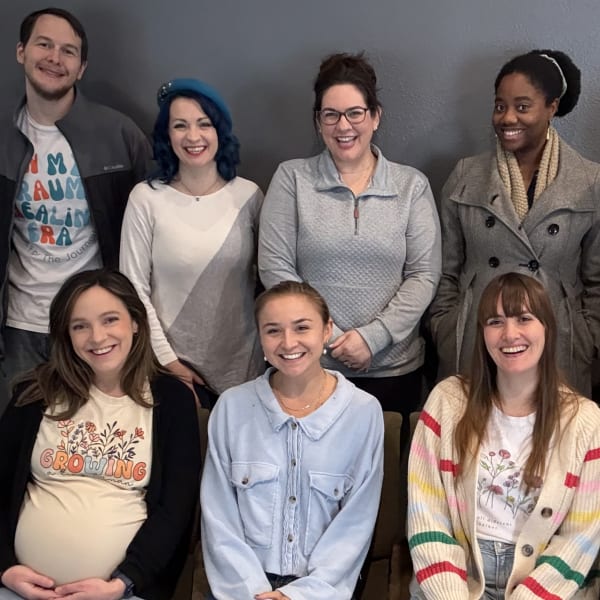
The collective, in practice
Our team, our offices, and the community gatherings that fund sponsored sessions.


Hope does not happen by accident
It happens when people decide that trauma will not have the final word. Your generosity becomes part of someone's healing story — one person, one family, one generation at a time.